
AN Chemical corporation
Welcome to the ANCC Chemical World
TIRE INDUSTRY – CHEMICAL & PROCESS
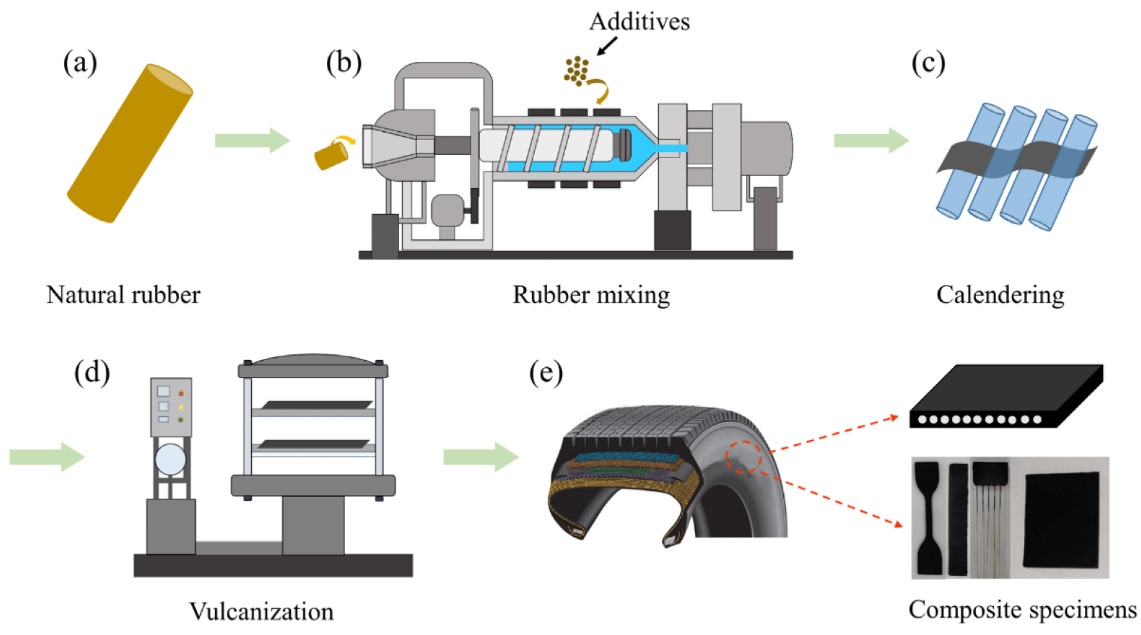
The tire production process is a complex series of steps involving the use of various materials and advanced manufacturing technologies. The production process can vary slightly depending on the type of tire being manufactured (e.g., passenger, truck, motorcycle) and the specific requirements of the tire. It’s important to note that tire manufacturing involves precision engineering and quality control to ensure the safety and performance of the final product.
Tire Classification
| Passenger Cars: Common Types: All-season, summer, winter tires. Common Sizes: Ranging from 13 inches to 18 inches, with standard sizes like 195/65R15 or 225/50R17. Chemical Components: Rubber Types: Natural rubber and synthetic rubbers (e.g., styrene-butadiene rubber, polybutadiene rubber). Fillers: Carbon black, silica. Chemical Additives: Antioxidants, antiozonants, accelerators (e.g., MBT, DPG), activators (e.g., zinc oxide), sulfur, plasticizers, stearic acid. | Aircraft: Common Types: Aircraft tires with various specifications. Common Sizes: Vary based on the type of aircraft, from small general aviation planes with sizes like 6.00-6 to larger commercial aircraft with sizes like 44×16.0-20. Chemical Components: Rubber Types: High-temperature resistant blends. Fillers: Carbon black. Reinforcements: Steel belts. Chemical Additives: High-temperature-resistant antioxidants and antiozonants. |
| Trucks and SUVs: Common Types: All-terrain, mud-terrain, highway tires. Common Sizes: Larger sizes, typically starting from 15 inches and going up to 22 inches or more. Examples include LT265/70R17 for light trucks. Chemical Components: Rubber Types: Natural rubber, synthetic rubbers. Fillers: Carbon black, silica. Reinforcements: Additional layers of steel belts for strength. Chemical Additives: Similar to passenger car tires, with variations in reinforcement materials. | Off-Road Vehicles: Common Types: Off-road, mud-terrain tires. Common Sizes: Larger sizes for off-road vehicles, such as 33×12.50R15 for off-road trucks or 25×10-12 for ATVs. Chemical Components: Rubber Types: Resilient blends for rugged conditions. Fillers: Heavy use of carbon black. Reinforcements: Aggressive tread patterns, reinforced sidewalls. Chemical Additives: Enhanced levels of antiozonants and reinforcements. |
| Motorcycles: Common Types: Cruiser, sport, touring, off-road tires. Common Sizes: Vary widely based on the type of motorcycle. Examples include 120/70ZR17 for sport bikes or 180/55R17 for touring bikes. Chemical Components: Rubber Types: Specialized blends for different types of motorcycles. Fillers: Carbon black, silica. Reinforcements: Cord fabric and steel belts. Chemical Additives: Antioxidants, antiozonants, accelerators, sulfur, plasticizers. | Racing Cars: Common Types: Racing slicks, rain tires. Common Sizes: Vary widely based on the racing discipline. For Formula 1, tire sizes are specified by the regulations, such as 305/670R13. Chemical Components: Rubber Types: High-performance synthetic rubbers. Fillers: Minimalistic use of carbon black, more reliance on silica. Reinforcements: High-strength steel belts, lightweight cord fabrics. Chemical Additives: High-performance accelerators, sulfur donors, and activators. |
| Commercial Vehicles: Common Types: Heavy-duty truck tires, bus tires. Common Sizes: Larger sizes, such as 295/75R22.5 for trucks or 315/80R22.5 for commercial buses. Chemical Components: Rubber Types: Robust blends with higher durability. Fillers: Larger amounts of carbon black for extended wear resistance. Reinforcements: Stronger steel belts for heavier loads. Chemical Additives: Increased levels of antioxidants and antiozonants. | Bicycles: Common Types: Road, mountain, hybrid tires. Common Sizes: Range from 20 inches for children’s bikes to 29 inches for mountain bikes. Examples include 700x25C for road bikes or 26×2.1 for mountain bikes. Chemical Components: Rubber Types: Specialized rubber blends for road or off-road use. Fillers: Carbon black or silica. Reinforcements: Lightweight cord fabric or aramid fibers. Chemical Additives: Antioxidants, antiozonants, plasticizers. |
| Agricultural Equipment: Common Types: Tractor tires, implement tires. Common Sizes: Large sizes, including 11.2-24 for rear tractor tires or 7.50-16 for front tractor tires. Chemical Components: Rubber Types: Durable natural rubber blends. Fillers: Significant use of carbon black for wear resistance. Reinforcements: Strong cords and steel belts for added strength. Chemical Additives: Enhanced levels of antiozonants and antioxidants. | Specialized Vehicles: Common Types: Run-flat tires, snow tires, specialized tires. Common Sizes: Vary based on the application. Run-flat tires may come in standard sizes, while snow tires may have sizes like 205/55R16 for passenger cars. Chemical Components: Rubber Types: Tailored to specific needs, such as run-flat or snow tires. Fillers: Varied depending on the application. Reinforcements: Customized based on the tire’s purpose. Chemical Additives: Tailored to specific performance requirements. |
| Construction and Industrial Equipment: Common Types: Solid tires, pneumatic tires. Common Sizes: Vary widely based on the specific equipment, ranging from small skid steer tires like 10-16.5 to larger excavator tires like 29.5R25. Chemical Components: Rubber Types: Solid rubber or heavy-duty synthetic blends. Fillers: Reinforcements like carbon black. Reinforcements: Solid construction or heavy steel belts. Chemical Additives: High levels of antioxidants. |  |
Tire and Rubber Production Chemical Material
| Basic Raw Material | Vital Raw Material: Sulfur – Zinc – Copper -Iron – Silica – Brine & Sea Salt – Flourspar | Important Basic Raw Material: Antimony – Aluminum – Clay – Coal – Cobalt – Limestone – Phosphate – Pin Trees – Tallow – Titanium -Vegetable Oil |
| Elastomer | General Purpose Natural Rubber – Synthetic Natural Rubber – Styrene Butadiene Rubber (SBR) – Butadiene Rubber (BR) – Ethylene Propylene Diene Rubber (EPDM) | Especial Elastomers: Butyl Rubber – Halobutyl Rubber – Isobutylenepara-methyl Styrene Rubber – Acrylonitrile Butadiene Rubber – Hydrogenated Acrylonitrile Butadiene Rubber – Curable PVC/NBR Polyblends – Acrylic Rubber – Polychloroprene – Chlorinated Polyethylene Rubber – Chlorosulfonated Polyethylene – Epichlorohydrin Rubber – Ethylene Acrylic Elastomer – Ethylene Vinyl Acetate – Fluoroelastomers – Perfluoroelastomer – Silicone Rubber |
| Reinforcing Materials | Textile Reinforcing Materials: Aramid – Carbon Fibers – Glass Fibers Nylon – Fabric Cord – Polyester Fiber -Rayon – Steel Cord & Cable | Adhesive Systems Used in Rubber – Dips for Rubber-to-Cord Adhesion: Resorcinol Formaldehyde Resin (Liquid) – Styrene Butadiene Vinylpyridine Latex – Isocyanate and/or Epoxy Treatment Adhesive Systems Used in Rubber – Additives for Cord Adhesion: Hydrated Precipitated Silica – Resorcinol Formaldehyde Resin (Solid) – Hexamethoxymethylmelamine (HMMM) – Hexamethylene Tetramine (HMT) – Cobalt Stearate |
| Thermoplastic Elastomers | Thermoplastic Elastomers: Styrenic Block Copolymers (SBC) – Thermoplastic Olefins (TPO) – Thermoplastic Vulcanizate (TPV) – Based on PP/EPDM | Thermoplastic Elastomers: Thermoplastic Vulcanizate (TPV) Based on NBR/PP – Thermoplastic Vulcanizate (TPV) Based on IIR/PP – Thermoplastic Vulcanizate (TPV) – Based on ACM/Nylon – Thermoplastic Vulcanizate (TPV) – Based on BIMS/Nylon – Thermoplastic Polyurethanes (TPUs) – Copolyester and Polyamide Block – Copolymers |
| Polyurethane | Polyurethane: Polyols – Adipic Acid- Ethylene Glycol – Polyester Polyol – Polypropylene Glycol Polyol | Isocyanates: 4,4′-Diphenylmethane Diisocyanate (MDI) – Toluene Diisocyanate (TDI) – Methylene-Bis-o-chloroaniline (MBCA) Chain Extenders: 1,4-Butanediol (1,4-BD) – Bis(beta-hydroxyethyl) Ether of Resorcinol (HER) – Hydroquinone Di-(2-hydroxyethyl) Ether (HQEE) – Trimethylolpropane (TMP) |
Tire and Rubber Production Chemical Material
Carbon Black, Fillers, Reinforcing Agents, and Coupling Agents
| Furnace Carbon Blacks | Thermal Carbon Black |
| Acetylene Carbon Black | Hydrated Precipitated Silica |
| Fumed Silica | TESPT Organosilane Coupling Agent |
| Kaolin Clay | Calcium Carbonate |
| Talc | Titanium Dioxide |
| Ground Coal | Iron Oxide |
Curatives
| Activators | Zinc Oxide Stearic Acid |
| Vulcanizing Agents (Sulfur Based) | Rubber Maker’s Sulfur Insoluble Sulfur Dithiodimorpholine (DTDM) Tetramethylthiuram Disulfide (TMTD) |
| Primary Accelerators | N-t-butyl-2-benzothiazole Sulfenamide (TBBS) N-Cyclohexyl-2-benzothiazole Sulfenamide (CBS) 2-(4-Morpholinothio)-benzothiazole Sulfenamide (MBS) N,N’-Dicyclohexyl-2-benzothiazole Sulfenamide (DCBS) 4-Morpholinyl-2-benzothiazole Disulfide (MBSS) Alkyl Phenol Disulfide Ethylene Thiourea (ETU) |

Curatives
| Secondary Accelerators | 2-Mercaptobenzothiazole (MBT) Benzothiazole Disulfide (MBTS) Tetramethyl Thiuram Monosulfide (TMTM) Zinc Dibutyldithiocarbamate (ZnDBC) Zinc Dimethyldithiocarbamate (ZnDMC) Tellurium Diethyldithiocarbamate (TeDEC) Diphenyl Guanidine (DPG) Di-o-Tolylguanidine (DOTG) |
| Inhibitors & Retarders | Cyclohexylthiophthalimide (CTP) Benzoic Acid Phthalic Anhydride Salicylic Acid Magnesium Oxide (MgO) |

Curatives
| Nonsulfur Vulcanizing Agents | Dicumyl Peroxide (DCP) Di(2-t-butylperoxyisopropyl)benzene (BBPIB) Methylol-Terminated p-Alkyl-Substituted Phenol Formaldehyde Curing Resin Zinc Oxide |

Antioxidants, Antiozonants, Tackifiers, Flame Retardants, and Blowing Agents
| Antioxidants | 2,2,4-Trimethyl-1,2-dihydroquinoline (TMQ) Acetone Diphenylamine Condensation Product (ADPA) 2,2,4-Trimethyl-1,2-dihydroquinoline (TMQ) Acetone Diphenylamine Condensation Product (ADPA) Phenyl-alpha-naphthylamine (PAN) Octylated Diphenylamine (8DPA) Methylene-bis-methylbutyl phenol (o-MBp14) N,N’-Di-beta-naphthyl-p-phenylene Diamine (DNPD) . |
| Antiozonants | N-1,3-Dimethylbutyl-N’-phenyl-p-phenylene Diamine (6PPD) N-N’-bis (1-methylheptyl)-p-phenylene Diamine (i88PD) N,N’-Diphenyl-p-phenylene Diamine (DPPD) Protective Waxes |

Antioxidants, Antiozonants, Tackifiers, Flame Retardants, and Blowing Agents
| Tackifiers | Phenol Formaldehyde Resins Phenol Acetylene Tackifying Resin 356 Petroleum Aliphatic Hydrocarbon Resins 358 Polyterpene Resins . |
| Blowing Agents (for Sponge Rubber) | Azodicarbonamide (ADC) p,p’-Oxybis(benzenesulfonyl) Hydrazide (OBSH) |
| Flame Retardants | Antimony Oxide (Antimony Trioxide) 365 Chlorinated Paraffin (CP) Alumina Trihydrate (ATH) Zinc Borate Hydrate Triaryl Phosphate (TAP) |

for mor information GET IN TOUCH
ancc – Tire Industry